


International Association for Peace and Economic Development
A global UPF association bringing together business and economic leaders to explore how responsible economic development can contribute to peace and mutual prosperity.
The International Association for Peace and Economic Development, known as IAED, is one of the primary associations of the Universal Peace Federation. It brings together business leaders and investors, economists, public officials, and development specialists to focus on how business and economic development can help create conditions for peace and mutual prosperity.
IAED was established under the leadership of Dr. Hak Ja Han, on the foundation of the economic vision and practical experience developed by UPF founders Dr. Hak Ja Han and late Dr. Sun Myung Moon. For the founders, economic development had to serve people, strengthen families, and help create conditions for peace. Trade and investment could contribute by building relationships beyond national and political divisions.
IAED was inaugurated on February 5, 2020, in the Republic of Korea, during World Summit 2020 organized by UPF. Its founding conference gathered 570 participants from business, government, and academia. Roger Wetherall now serves as IAED’s global coordinator.


Business as a Force for Peace
IAED sees business and economic development as an important part of peacebuilding. Jobs, investment, and productive enterprises give people a greater stake in stability and help families build secure lives. Economic relationships can also keep channels of communication open when political relations are difficult.
This approach reflects UPF’s principles of interdependence, mutual prosperity, and universal values. Interdependence recognizes that firms and workers rely on consumers and public institutions. Mutual prosperity means economic growth that creates opportunity for more people. Universal values bring honesty, responsibility, and respect for human dignity into economic decision-making.
IAED contributes to the wider international work of UPF, an NGO in general consultative status with the United Nations Economic and Social Council. Its work relates especially to Sustainable Development Goal 8 on decent work and economic growth. Goal 9 adds industry and innovation. Goal 17 provides a framework for partnerships.
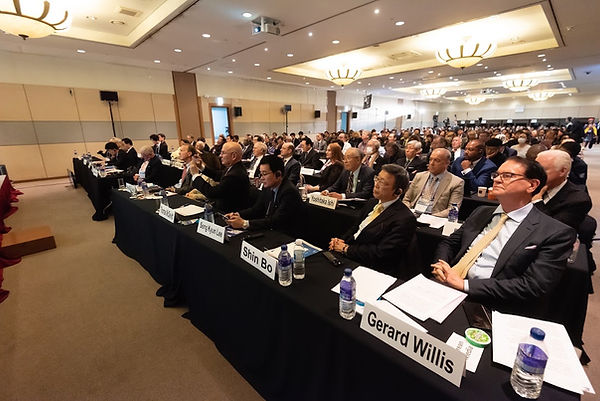
World Summit 2020 International Association for Peace and Economic Development IAED
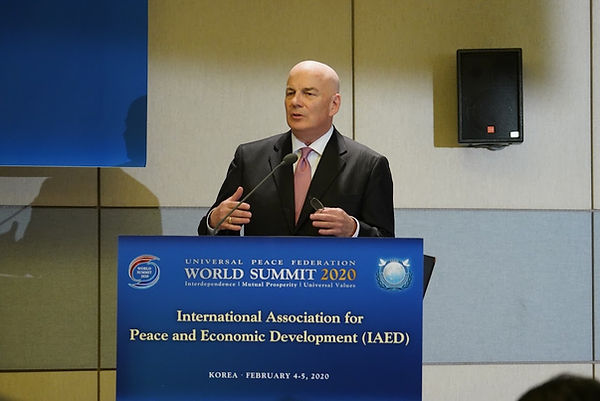
Thomas McDevitt, World Summit 2020 International Association for Peace and Economic Development IAED
Experience Before IAED
IAED was founded in 2020, but its roots reach back much further. For decades, the founders supported businesses that put economic ideas into practice under very different conditions. Some became established enterprises. Others remained experiments or faced serious limits. The record includes manufacturing and consumer products, as well as fisheries and agriculture. Hospitality, transportation, and technology added other lessons. The successes and failures of these businesses form part of the experience from which it can learn.
In the Republic of Korea, guided by Dr. Moon, Tongil Heavy Industries worked in machinery and automotive parts, while Ilshin Stone developed construction materials. Ilhwa, founded in 1971, moved into ginseng products and pharmaceuticals. McCol, its barley-based drink introduced in 1982, showed a different side of this experience by turning Korean barley into a distinctive consumer product.
In Japan, a founder-associated technology venture was Wacom, established in 1983 as an electronic research company. Its early work was highly innovative for its time. In 1984, Wacom introduced what the company describes as the world’s first cordless pen tablet, an early step in digital pen technology that later became its global specialty.
In the United States, fishing fleets operated from Alaska and New England, and shore facilities processed the catch. Boatbuilding became part of the same chain. Master Marine built and repaired vessels, while the One Hope design supported fishing and training. The seafood then moved inland through refrigerated distribution. True World Foods became a major final link, supplying restaurants around the country. Approximately 230 refrigerated trucks and 22 facilities served about 7,000 restaurant customers. The network did not introduce sushi to the United States, but it helped make reliable seafood supplies available as the American sushi market expanded.
The founders were also willing to try enterprise in places where politics, geography, or infrastructure made business unusually difficult. In China, another founder-associated venture, Panda Motor, began an ambitious automobile manufacturing project in Huizhou, Guangdong, in 1989. Construction began, but the project stalled before the planned automobile production started. Pyeonghwa Motors assembled vehicles in Nampo, DPRK, as an inter-Korean joint venture. In Alto Paraguay, the Leda Settlement combined agriculture and aquaculture with local education. Hospitality followed another path. The New Yorker Hotel in Manhattan became a major urban property that also hosted international gatherings. In Yeosu, The Ocean Resort brought together hotel and convention facilities with a waterpark as the region prepared for Expo 2012. These were very different ventures, but each added experience in creating jobs, infrastructure, or channels of human contact.
Not every initiative reached its intended scale. Some faced financial or regulatory limits. Others encountered political barriers. Those experiences also produced useful lessons. Professional management, transparency, legal compliance, and realistic evaluation all matter in turning a good idea into a sustainable project.
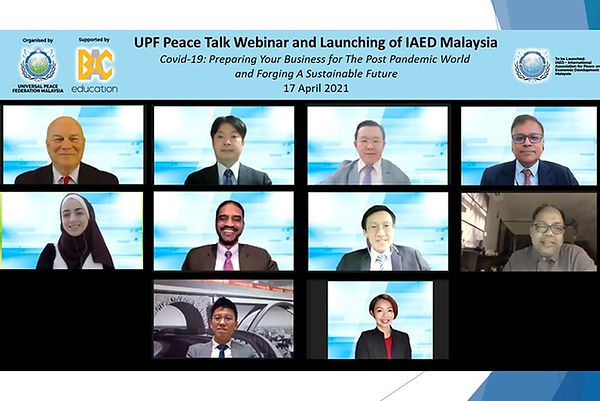
IAED Malaysia Peace Talk Webinar
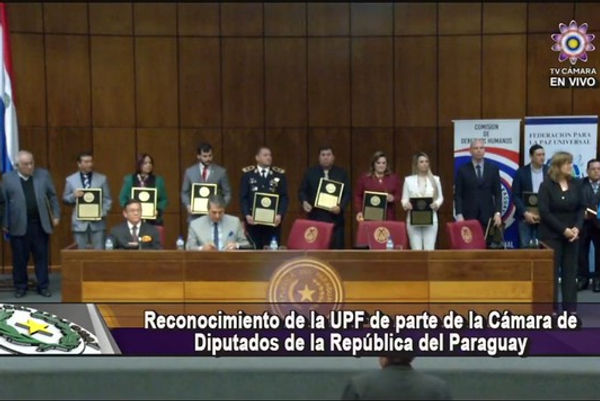
Celebration of International Friendship Day and Launch of IAED in Paraguay
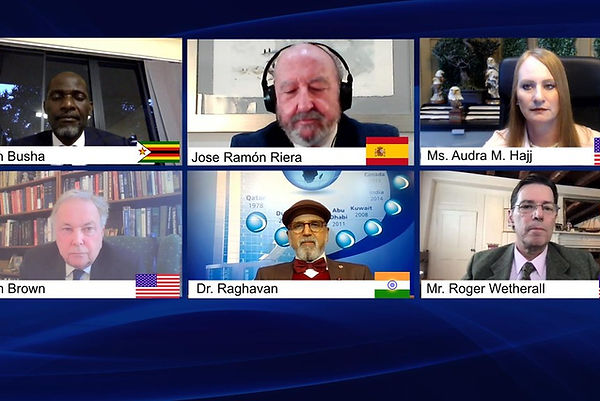
EUME-2022-02-02-Think Tank 2022 Forum EUME, February 2: IAED Session
IAED in Action
When IAED began to develop internationally, the same basic idea took different forms in different countries.
One of the early national launches came in Malaysia in April 2021, during the COVID-19 pandemic. More than 200 participants from 10 nations joined a seminar on preparing business for the post-pandemic world and building a sustainable future. A month later, an Asia Pacific conference on business leadership and peace attracted more than 2,100 registrations from 44 nations.
Latin America developed its own pattern. Argentina launched IAED in October 2021 and then turned the launch into a continuing discussion series. During 2022, specialists examined business social responsibility, changing labor conditions, and organizational sustainability. Paraguay followed a different route. IAED was launched in the Bicameral Hall of the National Congress in July 2022, where sustainable economic development was discussed alongside public and civic leadership.
At the same time, the network was becoming more international. In February 2022, IAED branches in Europe, Africa, and North America jointly examined how trade and economic engagement could support a more open relationship between North Korea and the wider world. In April 2023, a webinar on Social Value Investing in the Horn of Africa brought an academic framework for cross-sector partnerships into conversation with investors working in East Africa.
By 2025, the emphasis was moving from launching networks toward deeper work on economic ideas. In Peru, nearly 200 civic and business leaders joined a National Business Forum co-sponsored by IAED. In London, IAED-UK examined employee well-being in March and later turned to digital trust, artificial intelligence, and cybersecurity. The same year, regional coordinators were bringing their thinking together in Headwing Economics.
What links these programs is that IAED tests ideas in different settings, compares experience, and identifies questions that deserve further work. That process led to a more systematic effort: Headwing Economics.

UK Experts Discuss Building Trust in Digital Technologies, on October 22, 2025 in London.

September 2025 through the two-day webinar “Toward a Headwing Economy of Freedom, Peace and Shared Prosperity.”
Headwing Economics: A Working Framework
In 2025, IAED began developing Headwing Economics as a values-based thought for economic development. The first version was prepared in March 2025 by an IAED collaboration team. Its members were Abdoulay Wone and Dr. John Bellavance, together with Roger Wetherall and Alan Jessen. A revised version was published in December 2025.
The vision emphasizes personal dignity and responsibility. It supports private property and a free market while looking at ways to broaden access to productive ownership. Employee ownership, cooperatives, and community investment are among the models being studied. It also looks at family-supportive economic policy and the role of good governance in protecting fair competition.
IAED presented the concept publicly in September 2025 through the two-day webinar “Toward a Headwing Economy of Freedom, Peace and Shared Prosperity.” Nine experts took part and more than 160 participants joined from several regions. The conference grew from regular cooperation among five IAED regional coordinators and led to further revision of the framework.
IAED plans to continue developing the framework through research and professional review, supported by case studies and pilot projects. This will help show which ideas are useful in practice and which need further work.
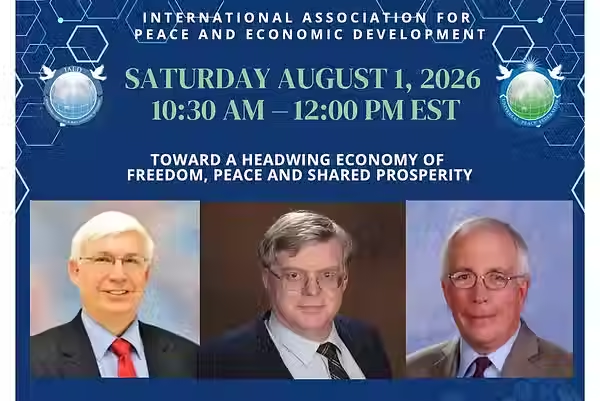
Webinar Offers Strategies for Building an Integral Economy
From Discussion to Partnership
IAED brings together people with different kinds of economic experience. Business leaders know what can be implemented. Economists and scholars test assumptions. Public institutions understand legal conditions, while investors and local communities bring practical experience.
IAED is actively building partnerships with economic thought leaders and organizations, developing as a network where economic ideas can be discussed, tested, and applied. Current areas of interest include responsible enterprise, wider access to productive capital, and public policies that support marriage and encourage family formation. Family-supportive workplaces and ethical technology offer further areas for testing. Economic cooperation across social or political divisions remains central.
IAED welcomes collaboration with companies and investors interested in testing these ideas. Universities and chambers of commerce can contribute research and professional networks. Public agencies and development organizations can help design credible projects. Research partnerships, business case studies, and carefully designed pilots can turn principles into evidence. Through that process, IAED seeks to make economic cooperation a more practical part of peacebuilding.
If you find this page helpful and informative please consider making a donation. Your donation will help Universal Peace Federation (UPF) provide new and improved reports, analysis and publications to you and everyone around the world.
UPF is a 501(c)(3) tax exempt organization and all donations are tax deductible in the United States. Receipts are automatically provided for donations of or above $250.00.

Donate to the Universal Peace Federation:
Your donation to support the general programs of UPF.


Donate to the Religious Youth Service (RYS):
Your donation will be used for service projects around the world.
Donate to UPF's Africa Projects:
Your donation will be used for projects in Africa.